
Dry Skin and Acne: Why You’re Breaking Out Even When Your Skin Feels Tight and Dehydrated
- T. Nash | Tranquil Radiance Esthetics
- Feb 18
- 4 min read
If you’re experiencing dry skin and acne at the same time, it can feel frustrating. Your skin feels tight, flaky, or dehydrated — yet you’re still noticing clogged pores, bumps, or recurring breakouts.
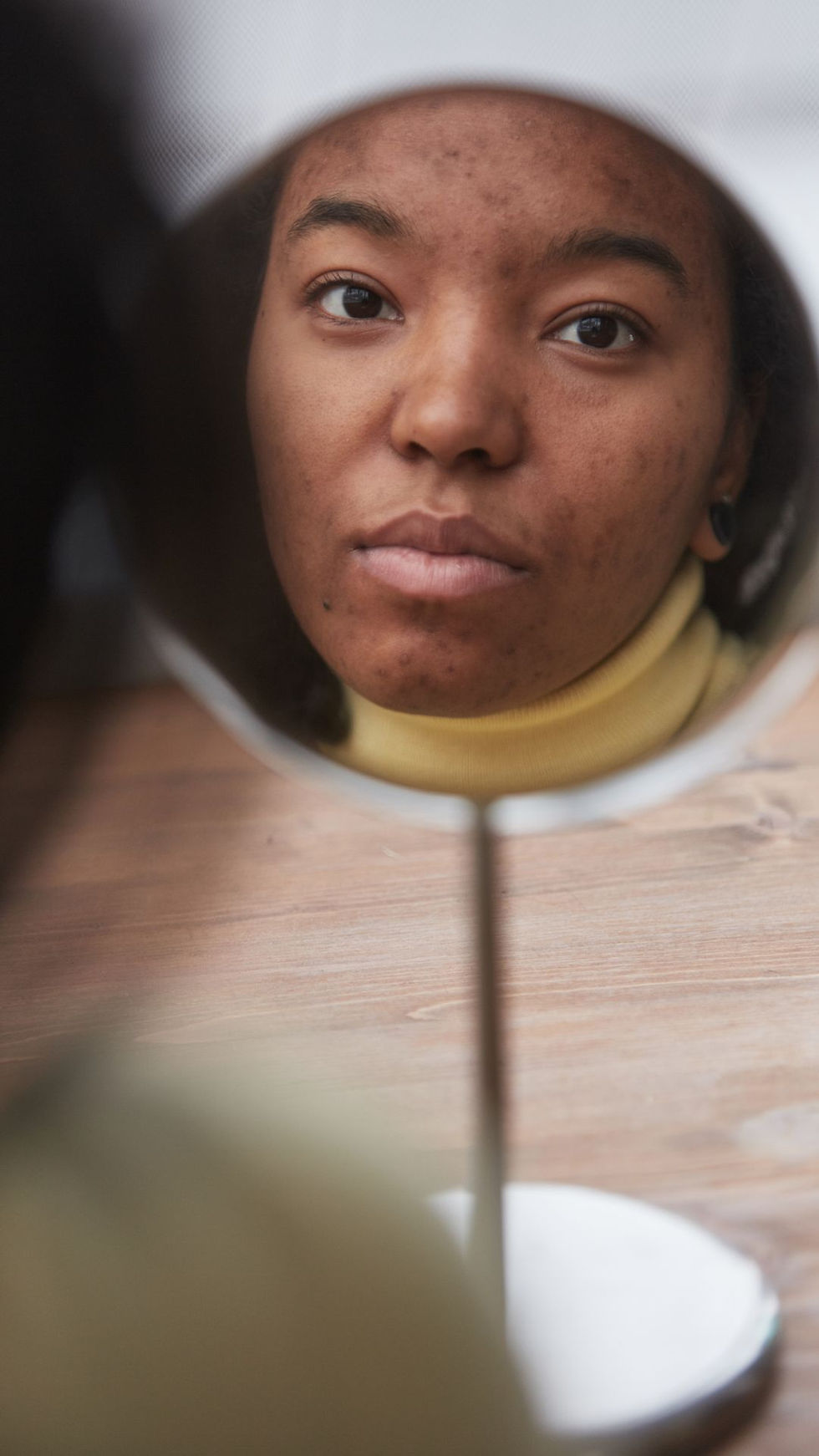
It seems contradictory, but it isn’t.
Dryness and congestion often exist in the same cycle. In many cases, dehydration and barrier disruption create the conditions that allow clogged pores to form. When the skin’s protective layer weakens and shedding becomes uneven, congestion becomes easier to develop.
To understand why, we need to look at what’s happening beneath the surface.
How Dryness Weakens the Skin Barrier
The skin barrier is your outer protective layer. Its role is to retain moisture, regulate inflammation, and maintain smooth, consistent shedding. When it’s functioning properly, oil flows through pores more freely and the skin recovers efficiently from stress.
When that barrier becomes compromised, the balance shifts. Water escapes more easily, leaving the skin feeling tight and uncomfortable. Dead skin cells don’t shed as evenly, so they begin to accumulate. The skin becomes more reactive, and healing slows.
This doesn’t happen overnight. It’s usually the result of repeated stress — cleansers that strip or dry out the skin, over-exfoliation, layering too many active ingredients, cold winter air combined with indoor heating, or skipping moisturizer in an attempt to “dry out” breakouts.
There’s also a physiological component. As estrogen levels fluctuate or decline with age, natural lipid production decreases. Those lipids are essential for barrier strength. When levels drop, the skin becomes more prone to dryness, slower recovery, and increased sensitivity.
Once the barrier weakens, normal shedding and oil flow become less efficient — and that’s where congestion begins.
How Dehydration Contributes to Clogged Pores
Healthy skin sheds dead cells in a controlled, continuous process. When skin becomes dehydrated, that shedding slows and becomes uneven. Dead cells remain in the follicle longer than they should. As oil continues to move through the pore, it combines with those retained cells, gradually narrowing the pore opening.
This is how congestion develops.
In its early stages, this doesn’t always look like an obvious breakout. It may present as rough texture, small under-the-skin bumps, closed comedones, or skin that appears dull and uneven. This pattern is extremely common in clients experiencing both dehydrated skin and acne.
Dehydration can also cause surface cells to become more compact, making it harder for trapped debris to rise to the surface. Instead of visible blackheads, congestion may remain beneath the skin.
The reassuring part is that early-stage congestion often improves significantly with proper hydration, controlled exfoliation, and consistent care.
When Congestion Becomes More Reactive
Bacteria are naturally present inside every pore. However, when a pore remains blocked for an extended period, bacteria increase within that confined space. The skin recognizes this buildup as irritation and activates an inflammatory response.
That response leads to swelling around the pore, tenderness, and a bump that feels more noticeable. Healing may take longer, and marks can linger after the bump resolves. Sometimes this presents as multiple breakouts; other times it’s a single recurring area that never fully settles.
If the barrier remains compromised, recovery becomes slower and irritation persists.
Recognizing the Progression
Dry skin and acne don’t all exist at the same point in the process.
In early stages, the issue is primarily barrier stress — tightness, mild flaking, occasional bumps. The priority here is hydration and lipid repair.
As dehydration continues, congestion becomes more apparent. Rough texture and trapped bumps develop, and the skin requires hydration alongside controlled exfoliation.
If blocked pores remain untreated, they become more reactive and noticeable. At that point, structured correction is necessary — while still protecting the barrier.
In some cases, particularly with hormonal shifts or aging-related dryness, congestion follows a cyclical pattern. This requires a long-term strategy rather than short bursts of product changes.
Identifying where your skin is in this progression allows you to respond appropriately instead of escalating prematurely.
What To Do This Week If Your Skin Feels Dry but Congested
Start by simplifying your routine. Use a gentle cleanser that doesn’t leave your skin tight, follow with hydration and moisturizer, and apply SPF daily.
Pause harsh actives for 7–10 days to allow your skin to stabilize. Focus on hydration, applying products to slightly damp skin and sealing them with moisturizer. If your skin is calm, incorporate one gentle exfoliation session during the week — not daily and not aggressively.
After 10–14 days, reassess.
If congestion softens and your skin feels more balanced, barrier disruption was likely a key contributor. If nothing improves — or congestion continues to build — your skin may require more structured correction rather than additional stripping.
When to Seek Professional Support
If you’re in Brampton and struggling with dry skin and clogged pores, a professional assessment can determine whether your skin needs barrier repair, controlled exfoliation, or corrective treatment.
A facial designed to restore balance while addressing congestion — such as the Radiance Signature — can provide a structured reset. If you’re unsure which stage your skin is in, a personalized skin consultation in Brampton can help create a plan tailored to your skin’s current needs.
Dry skin and acne can absolutely coexist. When the barrier weakens and dehydration disrupts normal shedding, clogged pores become more likely. The solution isn’t to intensify treatment — it’s to restore balance first, then correct with intention.
If your skin feels inconsistent or reactive, it may not need stronger products. It may need a strategic reset.
Take care of your glow,
Tamika

Comments